
Defending (in) the Sugarbush

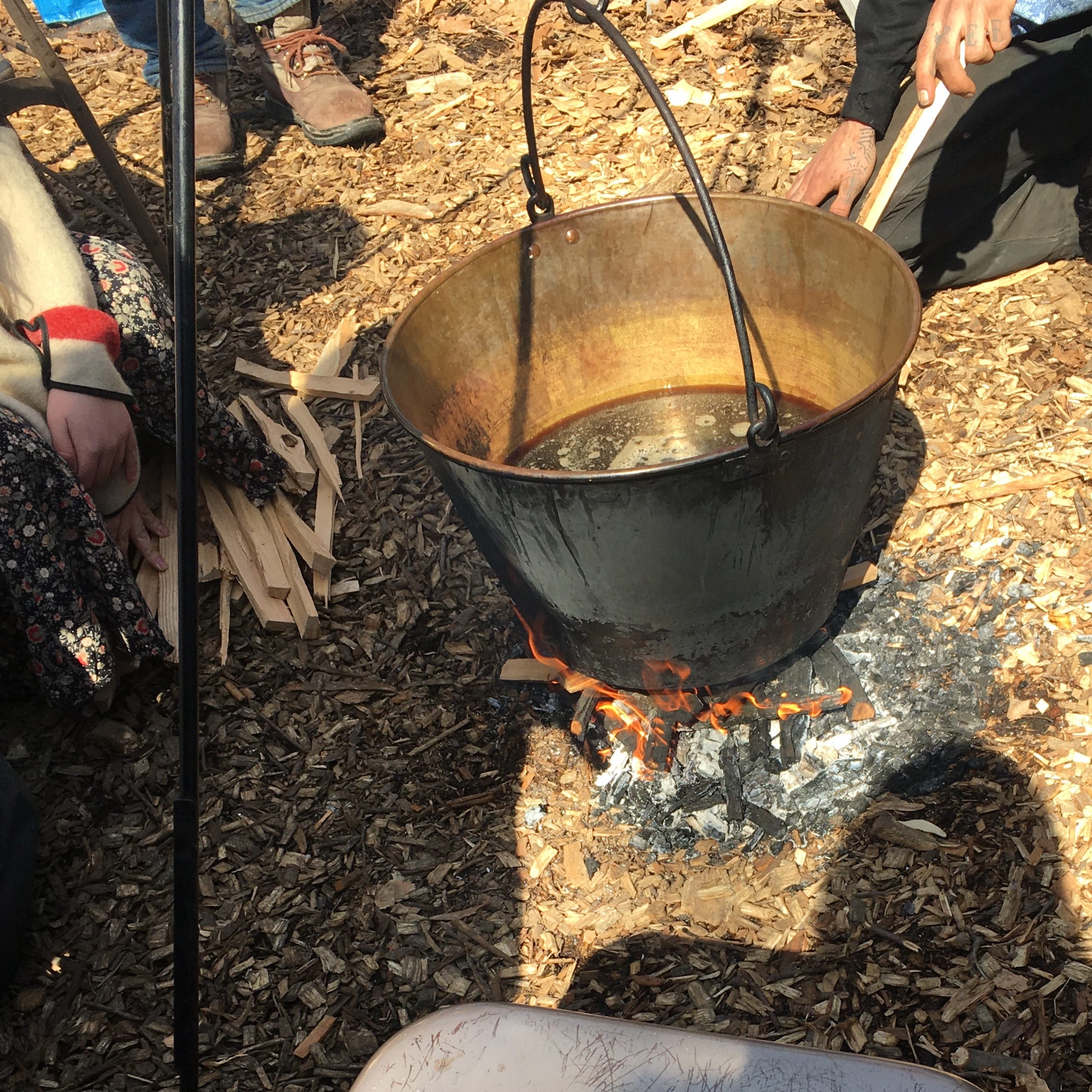
Yesterday I had the pleasure of attending the public portion of a dissertation proposal defense by a friend of mine, who is researching the impacts of industrial development (such as lumber and mining) on Anishinaabe food sovereignty in parts of Michigan. In her intro, she thanked us all for being there and added a special shoutout to her coworkers, who were literally calling into Zoom from a nearby island where they were tapping maple trees and making sugar.
As someone who has been thinking about Anishinaabe ways of knowledge creation for a long time, this sent me off on a daydream with a single thought: what if you could defend your dissertation in the sugarbush? I know of people, for example, who have gotten permission to have community members and first language speakers on their committees. I think I have heard of people doing their defense in public spaces with community present. But what if you took the entire thing out of the classroom or conference room and into the sugarbush? I posted a bit of a similar thought last month on Twitter, asking why the university won’t fund us to do sugarbush—without having to publish a paper about it. Because Anishinaabe theorizing happens in the doing.
But I kept thinking. I wouldn’t want a dissertation defense in the sugarbush to look just like a defense in a classroom, necessarily. What would an Anishinaabe dissertation defense look like, if it indeed could exist? Would it still consist of giving a presentation on your work followed by a panel of experts (perhaps these would be community experts, not professors) grilling you with questions? I feel like I would imagine a sugarbush defense to involve much more physical action than just sitting and talking. The chosen experts might watch how you tap the trees, how you carry yourself, how you pray and how you lead. I don’t know. Just some ideas.
I eventually departed this daydream because I’m not sure the entire concept of “a dissertation,” “a dissertation defense,” or even “a PhD” is something that we should try to Indigenize, or Anishinaabefy or what-have-you. I strongly dislike starting from a base so tied up with colonialism. Yet I do think there is room for some sort of evaluation and credentialing process within our communities based in our traditions. We had/have experts on these topics, who would guide learners and indicate when they were ready to go off on their own, when they were ready to teach someone else. Perhaps this was/is most formally present in Midewiwin, but I think it’s visible in other aspects of Anishinaabe life too.
Maybe there are folks out there doing this kind of thing in some places—Dechinta comes to mind, as does Seven Generations Education Institute. Maybe we need to make our own form of “PhD,” our own credential system, with our own standards for what qualifies a person, what knowledge and knowledge-creation looks like, how a person should be evaluated. Of course this raises questions about how such a system would be supported, especially so long as we still live in a capitalist colonial world. But I’d like to dream bigger about these things. Defending (in) the sugarbush as gikendaasowin?